
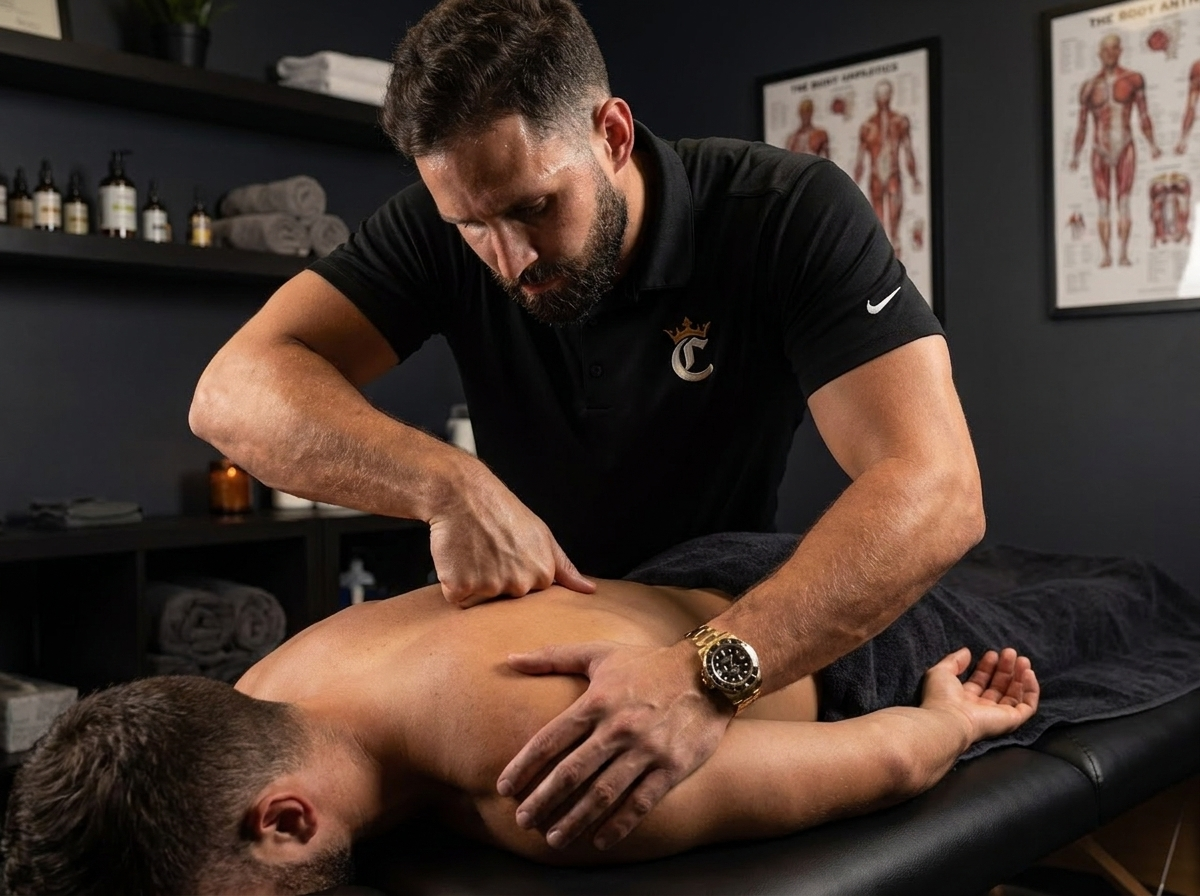
Training and competition place repeated physical demands on the body. Muscles contract, connective tissue absorbs force, and the nervous system responds to fatigue and stress. Without adequate recovery, these demands accumulate and eventually lead to performance decline, pain, or injury.
Soft tissue massage has become a standard component of athletic recovery programmes at every level of sport. This post explains why it matters, how it works, and what athletes can realistically expect from incorporating it into their training schedule.
What Is Soft Tissue Massage?
Soft tissue massage is a broad term that refers to manual therapy techniques applied to the muscles, fascia, tendons, ligaments, and other connective tissue structures of the body. Unlike relaxation massage, which focuses primarily on general stress reduction, soft tissue massage used in an athletic context is clinically directed. It targets specific areas of dysfunction, tightness, or restriction that are contributing to pain or limiting movement.
Techniques used within soft tissue massage for athletes include deep tissue massage, myofascial release, trigger point therapy, sports massage, and cross-fibre friction. A therapist may use one or a combination of these approaches depending on what the clinical assessment reveals.
The underlying aim across all these techniques is to influence the soft tissue in a way that restores normal function, reduces pain, and supports the body’s natural recovery processes.
How Soft Tissue Massage Supports Athletic Recovery
Reducing Muscle Soreness After Training
Delayed onset muscle soreness (DOMS) is a familiar experience for most athletes. It typically peaks 24 to 72 hours after intense or unfamiliar exercise and results from microscopic damage to muscle fibres and the inflammatory response that follows.
Soft tissue massage applied in the hours and days after training helps by improving circulation to the affected muscles, reducing the accumulation of metabolic waste products, and modulating the local inflammatory response. Research consistently supports its effectiveness in reducing the severity and duration of DOMS, helping athletes return to training with less disruption.
Improving Range of Motion and Flexibility
Muscle tightness and fascial restrictions limit the range of motion available at joints. Over time, reduced flexibility increases the mechanical load on surrounding structures, alters movement patterns, and contributes to overuse injuries.
Soft tissue massage addresses these restrictions by mechanically lengthening tight muscle fibres, reducing adhesions within and between fascial layers, and decreasing the resting tone of overactive muscles. The result is improved joint mobility and more efficient movement mechanics, both of which are important for performance and injury prevention.
Breaking Down Scar Tissue and Adhesions
Previous injuries, even ones that have apparently healed, often leave residual scar tissue or fascial adhesions that affect tissue quality and movement. Tendons, in particular, are prone to developing disorganised collagen following injury or repetitive strain.
Techniques such as cross-fibre friction and deep tissue work can help remodel this scar tissue and improve the functional quality of the repaired tissue. This is one reason why soft tissue massage remains useful not just for acute recovery but also for managing the longer-term effects of past injuries.
Supporting the Nervous System
Physical recovery is not purely a muscular process. The nervous system also needs to downregulate from the heightened state of arousal associated with training and competition. Soft tissue massage activates the parasympathetic nervous system, lowering heart rate, reducing cortisol levels, and promoting a physiological state that is conducive to rest and repair.
For athletes in periods of high training load, this parasympathetic response is a meaningful contribution to overall recovery, not just a side effect of the treatment.
Identifying Tissue Issues Before They Become Injuries
A skilled therapist conducting soft tissue work develops a detailed understanding of the athlete’s tissue quality over time. Areas of increased tone, fascial restrictions, or early trigger point formation can be identified and addressed before they progress to pain or structural injury.
This monitoring function is an underappreciated aspect of regular soft tissue massage for athletes. Many overuse injuries develop gradually, and early intervention at the tissue level significantly reduces the likelihood of those issues escalating.
When Should Athletes Use Soft Tissue Massage?
Timing matters when incorporating soft tissue massage into a training programme. Different phases call for different approaches.
Pre Competition
In the immediate lead-up to a competition, deep and intensive soft tissue work is generally not appropriate. Heavy treatment can leave muscles feeling temporarily fatigued or altered in their neurological readiness. Lighter, activation-focused techniques are more suitable in the 24 to 48 hours before a competitive event.
Post Training Recovery
The most common application for soft tissue massage is in the recovery phase after training sessions. Whether that is the same day or within the following 48 hours depends on training intensity and the athlete’s schedule. Regular post-training massage helps prevent the accumulation of tissue dysfunction that builds up over a training block.
During Rehabilitation
For athletes managing an injury, soft tissue massage is frequently used alongside other rehabilitation work. It helps maintain tissue quality in the surrounding structures, addresses compensatory tension that develops around an injury site, and supports the overall rehabilitation timeline.
During Deload or Transition Periods
Periods of reduced training load, such as planned deload weeks or transitions between seasons, are a good opportunity for more thorough soft tissue work. With less training stress being introduced, the body can respond to and integrate deeper treatment more effectively.
Soft Tissue Massage Compared to Other Recovery Methods
Soft tissue massage is one tool among several available to athletes for recovery. The table below outlines how it compares to other common approaches.
|
Recovery Method |
Mechanism |
Best For |
Limitations |
|---|---|---|---|
|
Soft tissue massage |
Manual pressure, fascial release, trigger point work |
Tissue quality, soreness, flexibility, injury management |
Requires a trained therapist |
|
Foam rolling |
Self-applied compression and rolling |
General maintenance, warm-up, basic tightness |
Limited depth, less precise |
|
Ice bath or cold therapy |
Vasoconstriction, reduced inflammation |
Acute post-competition recovery |
May blunt training adaptations if used too frequently |
|
Compression garments |
External pressure, circulation support |
Travel recovery, mild fatigue |
Passive; does not address tissue dysfunction |
|
Stretching and mobility work |
Muscle lengthening, joint range |
Flexibility, movement quality |
Does not address deeper fascial or trigger point issues |
|
Sleep and nutrition |
Systemic repair, hormonal recovery |
Overall recovery foundation |
Not specific to soft tissue dysfunction |
Soft tissue massage works best when it is part of a broader recovery strategy rather than used in isolation. Combining it with adequate sleep, good nutrition, appropriate training load management, and other recovery modalities produces better outcomes than relying on any single approach.
What to Expect from a Soft Tissue Massage Session
For athletes who have not had clinical soft tissue work before, knowing what a session involves helps set realistic expectations.
A session will typically begin with a brief assessment of your current symptoms, training load, and any areas of concern. The therapist will use this information to guide the focus and depth of treatment.
During the session, the therapist applies manual pressure using hands, fingers, thumbs, or forearms to work through the target tissues. For deeper work or trigger point treatment, you may notice specific sensations such as a dull ache, pressure, or a referral pattern where discomfort is felt in an area away from where the therapist is working. This is normal and indicates that the relevant tissue is being effectively engaged.
After a session, mild soreness in the treated areas is common for 24 to 48 hours. Staying well hydrated after treatment and avoiding heavy training in the immediate aftermath supports the recovery response.
For athletes in Miami looking for clinically guided soft tissue work, soft tissue therapy at Castle Athletics and Recovery is delivered by therapists with experience across a wide range of sports and training backgrounds.
How Often Should Athletes Receive Soft Tissue Massage?
There is no universal answer, as frequency depends on training volume, competition schedule, injury history, and individual response to treatment. Some general principles apply:
-
Athletes in heavy training phases typically benefit from one to two sessions per week
-
During lower-intensity training periods, once every two to three weeks may be sufficient for maintenance
-
Acute injury or significant tissue dysfunction may require more frequent short-term treatment
-
Athletes with a history of recurrent injuries in specific areas often benefit from consistent targeted work throughout the year
A therapist who understands your training schedule and goals can help determine the most appropriate frequency for your situation.
Castle Athletics and Recovery offers soft tissue therapy as part of a wider range of performance and recovery services, with a clinical approach tailored to each individual athlete.
Recovery is not passive. It is an active process that benefits from informed decisions about how to support the body between training sessions. Soft tissue massage is one of the most effective tools available for maintaining tissue quality, managing soreness, and reducing injury risk over a long season. To find out how it might fit into your training and recovery routine, you can contact the team at Castle Athletics and Recovery to arrange an assessment.
FAQ
Is soft tissue massage the same as sports massage?
Sports massage is one form of soft tissue massage, but the two terms are not identical. Soft tissue massage is a broader category that includes sports massage alongside techniques such as myofascial release, deep tissue massage, trigger point therapy, and cross-fibre friction. In a clinical setting, a therapist typically draws on multiple techniques rather than using a single defined method.
Will soft tissue massage hurt?
Some discomfort is normal during deeper work, particularly when treating trigger points or areas of significant restriction. This is usually described as a productive discomfort rather than sharp pain. A good therapist will communicate with you throughout and adjust the depth and pressure based on your feedback.
Can soft tissue massage help prevent injuries?
Regular soft tissue massage contributes to injury prevention by maintaining tissue quality, identifying early signs of dysfunction, improving flexibility, and reducing chronic tension that might otherwise progress to an overuse injury. It is not a guarantee against injury, but it is a meaningful part of a proactive approach to physical health.
How long does a soft tissue massage session last?
Sessions typically range from 30 to 60 minutes depending on the area being treated and the complexity of the presentation. For full-body maintenance work, longer sessions are common. For targeted treatment of a specific region, a shorter focused session may be sufficient.
Should I get soft tissue massage before or after training?
Post-training is generally the more appropriate time for deeper soft tissue work, as it supports the recovery process without interfering with the muscle activation and neurological readiness needed for training. Light, activation-focused treatment before training is appropriate, but intensive deep tissue work is best saved for after.
Is soft tissue massage appropriate during injury rehabilitation?
Yes, in most cases. Soft tissue massage is frequently used as part of injury rehabilitation to maintain the quality of surrounding tissue, address compensatory tension, and support healing in the affected area. The specific techniques and areas targeted will depend on the nature and stage of the injury.