
Spending long hours at a desk is one of the most physically demanding things a person can do, even though it does not feel that way. The body is not designed to remain in a fixed position for extended periods, and when it does, the effects accumulate gradually. Tight hip flexors, a stiff thoracic spine, forward head posture, and persistent low back discomfort are among the most commonly reported issues for people who work primarily at a desk.
The encouraging part is that most of these issues are addressable through consistent, targeted habits. This post outlines practical mobility tips informed by recovery principles to help desk workers reduce pain, restore movement, and protect their long-term physical health.
Why Desk Work Creates Physical Problems
To understand how to prevent desk-related pain, it helps to understand why it develops in the first place. When you sit for long periods, several things happen in the body simultaneously.
The hip flexors, which connect the front of the hip to the lumbar spine, remain in a shortened position for hours at a time. Over weeks and months, they begin to adapt to that shortened state. When you stand or walk, they can no longer lengthen fully, which places strain on the lower back and alters how the pelvis sits.
At the same time, the muscles of the upper back and rear shoulders, which are responsible for pulling the shoulder blades back and keeping the chest open, become elongated and weakened from hunching forward. The muscles of the chest and front of the shoulder shorten and tighten to compensate. This imbalance leads to the rounded posture many desk workers develop over time.
The neck is particularly vulnerable. A head positioned even a few centimetres forward of the neutral spine alignment significantly increases the load on the cervical vertebrae and the muscles supporting the head. Sustained forward head posture is a primary driver of headaches, neck tension, and upper trapezius tightness in office workers.
None of these changes happen overnight, which means they are also reversible with the right approach applied consistently.
The Most Effective Mobility Habits for Desk Workers
Move Every 30 to 45 Minutes
The single most impactful change a desk worker can make is to interrupt prolonged sitting on a regular basis. Research consistently supports the idea that frequent, brief movement breaks are more beneficial than a single longer bout of exercise at the end of the day.
This does not mean a full workout every half hour. Even standing up, walking to another room, or performing a brief set of movements for two to three minutes is enough to counteract some of the physical effects of prolonged sitting. Setting a timer or using a reminder app can help build this into your routine until it becomes automatic.
Hip Flexor Stretching
Given how much time the hip flexors spend in a shortened position during desk work, targeted stretching is one of the most valuable things you can do. A low lunge stretch, where one knee is on the floor and the opposite foot is forward, held for 60 to 90 seconds on each side, is one of the most effective options.
For greater effect, add a slight posterior pelvic tilt during the stretch by gently tucking the tailbone under. This engages the glute of the rear leg while deepening the stretch on the hip flexor. Performing this stretch two to three times per day, particularly in the morning and after long periods of sitting, yields noticeable results over time.
Thoracic Spine Mobility Work
The thoracic spine, which runs from the base of the neck to roughly the lower rib cage, tends to become stiff and compressed with prolonged sitting. Improving mobility in this region can have wide-reaching effects, reducing neck pain, improving shoulder movement, and alleviating some forms of low back discomfort.
A simple and effective exercise is the thoracic extension over a foam roller. Lying on your back with the roller positioned horizontally across your mid-back, you allow gravity to open the front of the chest and extend the thoracic vertebrae. Moving the roller up and down in small increments targets different segments of the spine. Two to three minutes daily produces meaningful changes over a few weeks.
Neck and Upper Trapezius Release
Tension in the neck and upper trapezius is almost universal among desk workers. While self-massage and stretching can help manage the symptom, understanding the contributing factors leads to more lasting relief.
Chin tucks are one of the most effective exercises for counteracting forward head posture. Performed seated or standing, you gently draw the chin straight back without tilting the head, creating a slight double-chin appearance. This repositions the cervical vertebrae and activates the deep neck flexors, which are often underused in people with chronic neck tension. Three sets of ten repetitions throughout the day is a reasonable starting point.
Lateral neck stretches, where you tilt the ear toward the shoulder and hold for 30 to 45 seconds, can also provide relief for the upper trapezius. These are best performed gently and without forcing the range of motion.
Glute Activation
Prolonged sitting tends to inhibit the glutes, a phenomenon sometimes informally called gluteal amnesia. When the glutes do not fire properly, other muscles including the low back extensors and hamstrings compensate, which often contributes to back pain and altered movement patterns.
Exercises such as glute bridges, clamshells, and standing hip extensions help restore normal glute function. These do not require equipment and can be performed during movement breaks at home or incorporated into a short morning routine.
Wrist and Forearm Mobility
For those who type or use a mouse extensively, the forearms and wrists deserve attention. Repetitive strain in these areas can lead to discomfort that extends into the elbow and shoulder. Wrist extension and flexion stretches, held gently for 30 seconds in each direction, along with forearm pronation and supination exercises, help maintain mobility and reduce cumulative tension.
Quick Reference: Common Desk Worker Issues and Mobility Solutions
| Common Problem | Primary Cause | Recommended Mobility Focus |
| Low back pain | Tight hip flexors, weak glutes | Hip flexor stretches, glute activation |
| Neck tension | Forward head posture | Chin tucks, lateral neck stretches |
| Upper back stiffness | Prolonged hunching forward | Thoracic extension, foam rolling |
| Shoulder tightness | Chest tightening, rear shoulder weakening | Chest opening, posterior shoulder work |
| Wrist and forearm discomfort | Repetitive keyboard and mouse use | Wrist flexion and extension stretching |
| Headaches | Cervical tension, eye strain | Neck mobility, regular screen breaks |
The Role of Professional Recovery in Desk Worker Health
Self-directed mobility work is valuable, but there are limits to what you can address on your own. Many desk workers carry significant accumulated tension that requires hands-on intervention to resolve effectively. This is where professional recovery services become relevant. Facilities like Castle Athletics and Recovery offer structured recovery sessions that go beyond what stretching alone can achieve.
Soft Tissue Therapy
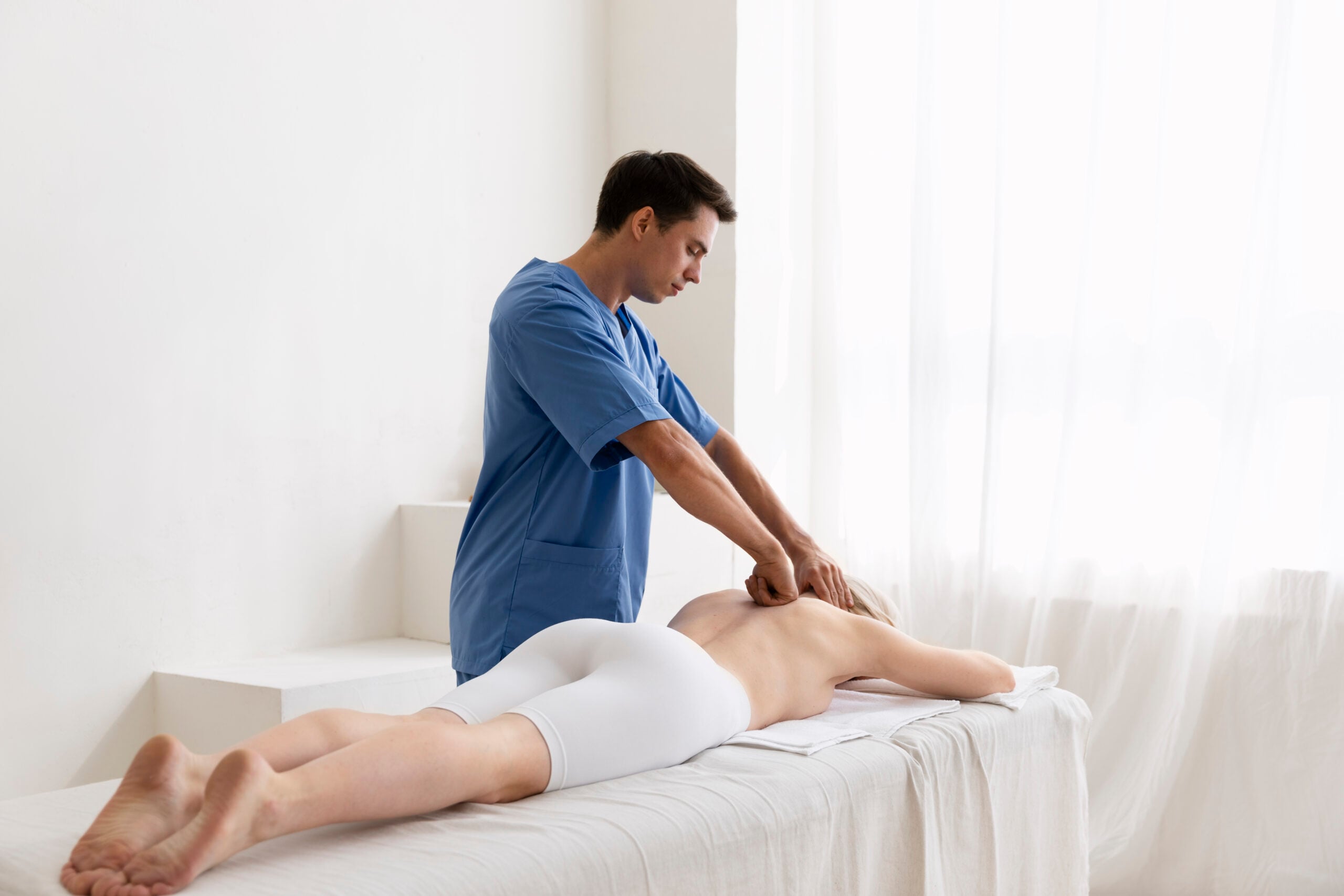
Soft tissue therapy targets the muscles, fascia, and connective tissue directly. For desk workers, this often means addressing the upper trapezius, levator scapulae, hip flexor complex, and thoracic paraspinals, areas that accumulate the most tension from prolonged sitting. Hands-on work can release restrictions that have developed over months or years and restore normal tissue quality more quickly than stretching alone.
Cupping Therapy
Cupping therapy is another modality that can be particularly useful for desk workers. By applying cups to the skin to create suction, the technique draws blood flow toward targeted areas and lifts the superficial fascia away from underlying tissue. This can be effective for the upper back, neck, and shoulder regions where desk workers often carry the most tension. You can read more about how this treatment works on the cupping therapy page.
Mobility Assessments
A practitioner can identify specific movement restrictions or imbalances that may not be obvious from self-assessment. For example, someone may believe their low back pain is a back problem when it is actually driven by hip flexor tightness or thoracic stiffness. A targeted assessment allows recovery work to address the root cause rather than just the symptom.
Building a Sustainable Routine
One of the most common mistakes desk workers make is trying to compensate for a week of inactivity with a single long session of stretching or foam rolling. While this is better than nothing, the body responds more effectively to smaller, more frequent inputs.
A sustainable routine for desk workers might look something like this across the day.
- Morning: 5 to 10 minutes of targeted mobility work including hip flexor stretches, thoracic extension, and chin tucks.
- Throughout the workday: Brief movement breaks every 30 to 45 minutes, lasting 2 to 3 minutes each.
- End of workday: A short session of 10 to 15 minutes addressing the areas that feel tightest, which often includes upper back, hips, and neck.
- Weekly: A professional recovery session for more thorough soft tissue work and ongoing assessment of how the body is responding.
Consistency matters more than duration. Ten minutes of mobility work performed daily produces far better outcomes than an hour performed once a week.
Ergonomics and Mobility Work Together
Mobility work addresses what happens to the body during and after desk work, but ergonomics addresses the conditions that create the problem in the first place. Both are important, and they work best in combination.
A few ergonomic adjustments that support physical health include positioning the monitor so the top of the screen is at or just below eye level, ensuring the chair supports the natural lumbar curve, keeping the feet flat on the floor or a footrest, and positioning the keyboard so the elbows are at roughly 90 degrees.
Even with ideal ergonomics, the body still needs regular movement. The goal is to reduce the severity of the physical stress while using mobility work to manage what remains.
If you are curious about what a professional recovery environment looks like, the gallery provides a sense of the space and setup available at Castle Athletics and Recovery in Miami.
Frequently Asked Questions
How long does it take to notice improvement from mobility work?
Most people notice some degree of improvement within one to two weeks of consistent daily practice. More significant changes in range of motion and pain levels typically emerge over four to six weeks. The timeline varies depending on how long the restrictions have been present and how consistently the exercises are performed.
Is it safe to stretch when I am already in pain?
In most cases, gentle mobility work is safe even when some discomfort is present. However, if you are experiencing acute pain, sharp or radiating symptoms, or pain that has followed an injury. It is advisable to consult a practitioner before beginning any new exercise or stretching routine.
Can professional recovery sessions help even if I am not an athlete?
Yes. Recovery services are not limited to athletes. Desk workers, people recovering from injury, and anyone dealing with the physical effects of daily life can benefit The approach. It is adapted to each person’s needs regardless of their activity level.
How often should a desk worker see a recovery practitioner?
This depends on the severity of your symptoms and your goals. For general maintenance and prevention, once or twice a month is often sufficient. For those managing chronic tension or working toward specific outcomes, more frequent visits in the early stages may be beneficial.
What is the difference between a mobility routine and a warm-up?
A warm-up is typically performed immediately before physical activity to prepare the body for movement. A mobility routine is a more targeted practice aimed at improving range of motion. Both serve different purposes and are not interchangeable.
How can I get started with professional recovery support in Miami?
You can get in touch through the contact page to discuss your situation and find out which services are most appropriate for your needs.