
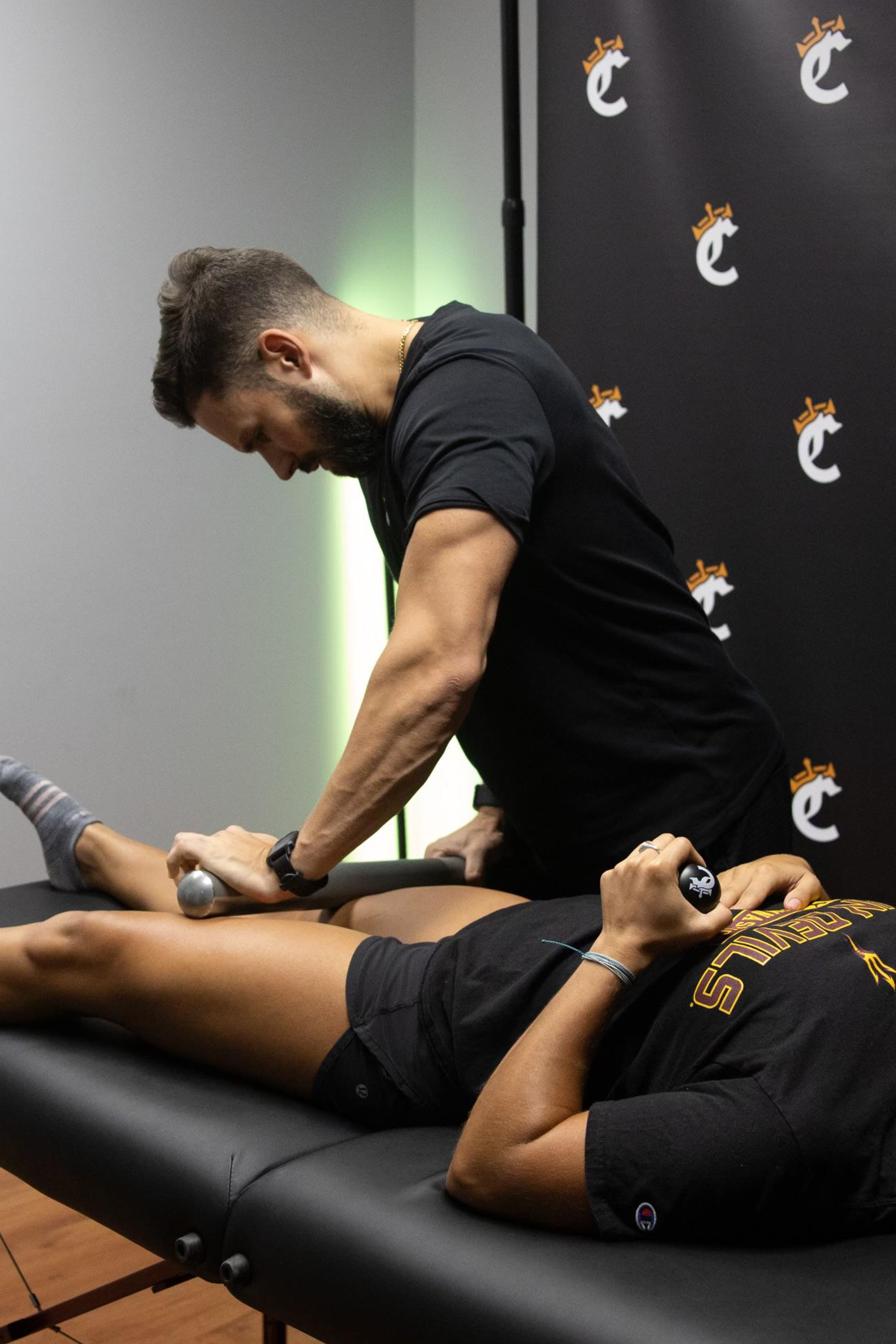
Body tempering is a soft tissue treatment method that uses heavy, cylindrical steel rollers to apply direct compressive force to muscles, tendons, and connective tissue. Unlike foam rolling or manual massage, which rely on surface-level pressure, body tempering works by placing significant weight directly on the tissue to create a deeper mechanical effect.
The technique was developed by powerlifting coach Donnie Thompson, who used it to help athletes recover faster and move more freely. Since then, it has made its way into athletic training rooms, recovery centers, and physical therapy practices as a complement to conventional treatment approaches.
The core principle behind body tempering is straightforward: sustained, heavy compression can help reset muscle tone, reduce stiffness, and improve the range of motion available at a joint. The steel rollers used in the process typically weigh between 35 and 150 pounds, and they are rolled slowly over a muscle group while the person lies still and breathes through the pressure.
How Does Body Tempering Work?
To understand how body tempering works, it helps to know a little about how muscles respond to prolonged compression.
The Role of Mechanoreceptors
Muscles contain sensory receptors called mechanoreceptors. These receptors detect changes in pressure, tension, and stretch, and they communicate that information to the nervous system. When sustained compression is applied to a muscle, certain mechanoreceptors send signals that encourage the muscle to relax and reduce its resting tone. This is sometimes referred to as autogenic inhibition, and it is the same mechanism involved in prolonged stretching.
Body tempering takes advantage of this response by keeping the weight on the tissue long enough for the nervous system to register the input and begin lowering tension in that area. The result is a muscle that feels looser, moves more freely, and recovers from effort more efficiently.
Compression and Fascial Tissue
Fascia is the connective tissue that surrounds and connects muscles throughout the body. When fascia becomes restricted due to overuse, injury, or inactivity, it can limit movement and contribute to chronic tightness. The compressive force of a steel tempering roller helps to hydrate and mobilize fascial tissue by pressing fluid through it and encouraging more normal tissue glide between layers.
This effect is one reason body tempering tends to produce noticeable changes in range of motion fairly quickly, even after a single session.
Effects on Blood Flow and Recovery
Heavy compression followed by release also stimulates local circulation. As the roller moves along a muscle, it temporarily displaces blood and interstitial fluid. When the roller passes, fresh blood flows back into the tissue. This mechanical flushing effect can support the removal of metabolic waste products that accumulate during intense training.
Body Tempering vs. Other Recovery Methods
It is useful to understand where body tempering fits among other soft tissue and recovery tools.
| Method | Pressure Level | Depth of Effect | Requires Practitioner | Best For |
|---|---|---|---|---|
| Foam rolling | Low to moderate | Superficial | No | General self-maintenance |
| Manual massage | Moderate | Moderate | Yes | Relaxation, circulation |
| Body tempering | High | Deep tissue and fascia | Yes | Chronic tightness, mobility |
| Instrument-assisted soft tissue (IASTM) | Moderate | Superficial to moderate | Yes | Scar tissue, adhesions |
| Cupping therapy | Decompressive | Superficial to moderate | Yes | Circulation, fascial lift |
Each of these methods works through a different mechanism, and many practitioners use them in combination. For example, cupping therapy applies negative pressure to lift tissue upward, while body tempering applies positive pressure downward. Together, they address tissue from different angles and can complement each other well in a recovery session.
Who Can Benefit from Body Tempering?
Body tempering is not limited to elite athletes. It is useful for anyone who deals with persistent muscle tightness, restricted joint movement, or delayed recovery between training sessions. That said, it is particularly common among the following groups.
Strength Athletes
Powerlifters, Olympic weightlifters, and strongman competitors often experience significant tightness in the hips, thoracic spine, and shoulders due to the heavy loading patterns involved in their sport. Body tempering is well-suited to these areas because the steel rollers can apply enough force to influence deeply loaded tissues that lighter tools simply cannot reach.
Runners and Endurance Athletes
Repetitive motion sports create predictable patterns of tightness, particularly in the calves, hamstrings, IT band, and hip flexors. Body tempering along these areas can help reduce the cumulative stiffness that builds over a training cycle.
People with Desk-Related Tightness
Prolonged sitting shortens the hip flexors and contributes to thoracic stiffness. While body tempering is not a replacement for movement and exercise, it can help reduce the resting tension in muscles that have been held in shortened positions for long periods.
Those Returning from Injury
As part of a broader rehabilitation plan, body tempering can help address scar tissue and restore tissue extensibility in muscles that have been injured. This should always be coordinated with a qualified practitioner who can assess whether the timing and application are appropriate.
What to Expect During a Body Tempering Session
If you are considering body tempering for the first time, knowing what the experience involves can help you prepare.
The session begins with the practitioner identifying the areas of concern, which might be based on movement limitations, soreness, or specific training demands. You will lie on a padded surface, and the steel roller will be placed on the target muscle group.
The roller is moved slowly, often spending more time on areas that feel particularly restricted. The pressure is significant, and most people describe the sensation as intense but manageable. Unlike sharp or acute pain, the feeling tends to be a deep, heavy compression that the body generally tolerates well after the first few moments.
Sessions typically last between 20 and 45 minutes depending on how many areas are being addressed. It is common to notice an immediate improvement in how freely a joint moves after the session.
Some people experience mild soreness in the treated area the following day, similar to what you might feel after a deep tissue massage. Staying hydrated and avoiding intense training of the treated area immediately after a session can help minimize this.
Integrating Body Tempering into a Recovery Routine
Body tempering works best when it is part of a broader recovery strategy rather than a standalone solution. Here are some practical ways to incorporate it.
Before training: A brief body tempering session on areas of known restriction can improve range of motion and help you move more efficiently during your workout. This is particularly useful for athletes who struggle with hip or thoracic mobility in strength movements.
After training: Applying body tempering to muscles that were heavily loaded can accelerate the recovery process by reducing resting tension and supporting circulation.
Between training blocks: During deload weeks or scheduled rest periods, a more comprehensive session addressing multiple areas can help clear accumulated tightness before the next training block begins.
At Castle Athletics and Recovery, body tempering is offered alongside other recovery modalities so that clients can receive a targeted approach based on their specific needs and training demands. You can view the types of services available in the gallery or reach out directly through the contact page to learn more.
Safety Considerations
Body tempering is generally safe when applied by a trained practitioner, but there are situations where it should be avoided or modified.
Acute injuries, open wounds, active inflammation, blood clotting disorders, and certain skin conditions are contraindications for this type of treatment. Pregnancy also requires special consideration. A qualified practitioner will always perform an intake assessment before applying body tempering to make sure it is appropriate for your situation.
It is also worth noting that body tempering is not a diagnostic tool and does not replace medical evaluation. If you are dealing with persistent pain or a suspected injury, consulting a healthcare provider before beginning any soft tissue treatment is the right first step.
Frequently Asked Questions
What muscles can be treated with body tempering?
Most large muscle groups respond well to body tempering, including the quadriceps, hamstrings, glutes, calves, upper back, and shoulders. Areas near bony prominences or delicate structures require more care and are typically avoided or treated with lighter rollers.
How many sessions are needed to see results?
Some people notice improved range of motion and reduced tightness after a single session. For more persistent issues, a series of sessions scheduled over several weeks tends to produce more lasting results. The appropriate frequency depends on your training load and specific goals.
Is body tempering painful?
The pressure involved is significant, and the experience can be intense, especially on areas of high tension. However, it should not feel like sharp or acute pain. Most practitioners will adjust the weight and duration based on your feedback during the session.
Can body tempering replace stretching or mobility work?
No. Body tempering can improve tissue quality and reduce resting tension, but it does not replace the neurological and structural adaptations that come from consistent stretching and mobility training. It is most effective when used alongside, not instead of, regular movement practice.
How is body tempering different from a deep tissue massage?
Deep tissue massage uses the hands and forearms to apply pressure through skilled manual manipulation. Body tempering uses the weight of a steel roller to apply compressive force. The two approaches work through related but distinct mechanisms, and some practitioners combine them within the same session for a more comprehensive treatment.
Is body tempering suitable for beginners?
Yes, provided there are no contraindications. The weight of the roller and the duration of application can be adjusted to suit someone who is new to the technique. Starting with lighter rollers and shorter application times allows the body to adapt gradually.